The heel is where blisters occur most often – when hiking, running, in a skate or in new everyday shoes. The problem often announces itself with a slight burning sensation, and a few kilometres later the blister is there. In this guide we explain why the heel in particular is so susceptible, what you can do if it has already happened, and how you can prevent it with the right fit, socks and thin neoprene protection.
Why the heel in particular?
At the heel the skin meets the shoe's heel counter. With every step the heel lifts a little and drops again. If the shoe has a little too much room there, the skin rubs against the sock and shoe with every movement. These repeated shear forces separate the upper layers of skin from each other, and a blister forms. Heat and moisture intensify the effect, because softened skin is more sensitive.
The most common causes at a glance:
- heel slippage: the shoe is too big or laced too loosely, and the heel lifts with every step.
- hard or high heel counter: in new shoes the material has not yet adapted to the foot.
- narrow heel: some feet have a very narrow heel in relation to the forefoot and find it hard to get a shoe that sits firmly at the back.
- unsuitable socks: thick cotton socks soak up sweat, slip and wrinkle.
- strain: long distances, steep climbs or many push-offs, as in skating
First aid: what to do about a blister on the heel?
- React early: if you feel a burning sensation or see redness, take a break. A plaster or tape on the still intact skin can now prevent a blister from forming.
- Leave the blister closed: if possible, do not pierce a blister. The blister skin protects the sensitive skin underneath from dirt and germs.
- Cushion it: a blister plaster takes pressure and friction off the spot. If possible, leave it on until it comes off by itself.
- Find the cause: before you continue training, check your shoes, lacing and socks. Otherwise the next blister will form in the same spot.
- Seek medical advice: for open, inflamed or recurring sores, please consult a doctor.
Prevention: fit and lacing
The most important measure against heel blisters is a shoe that sits firmly at the back. The heel should not noticeably lift when walking, running or pushing off. When trying shoes on, pay attention to the following:
- Try shoes on in the afternoon or evening, when your feet are slightly swollen.
- Wear the socks you also wear for sport.
- Lace firmly over the instep so that the heel is pulled into the heel counter. With many sports shoes it helps to use the top eyelets as well.
- Break in new shoes and increase the duration slowly.
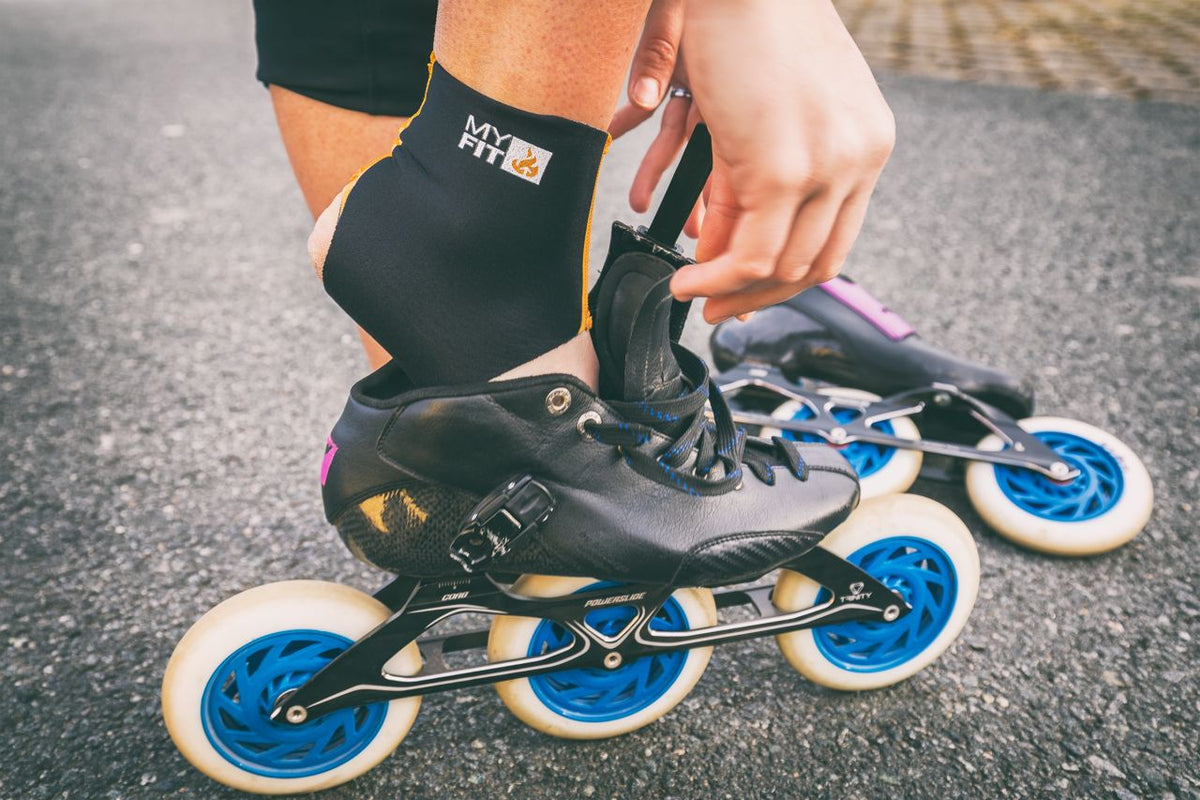
Inline skates and speed skates have their own rules, because the boot fits much more tightly. There the heel must sit firmly in the shell during push-off. Many speed skate shells can also be adapted to the foot with heat – find out more in the article Heat-moulding a speed skate boot.
Neoprene protection directly on the skin
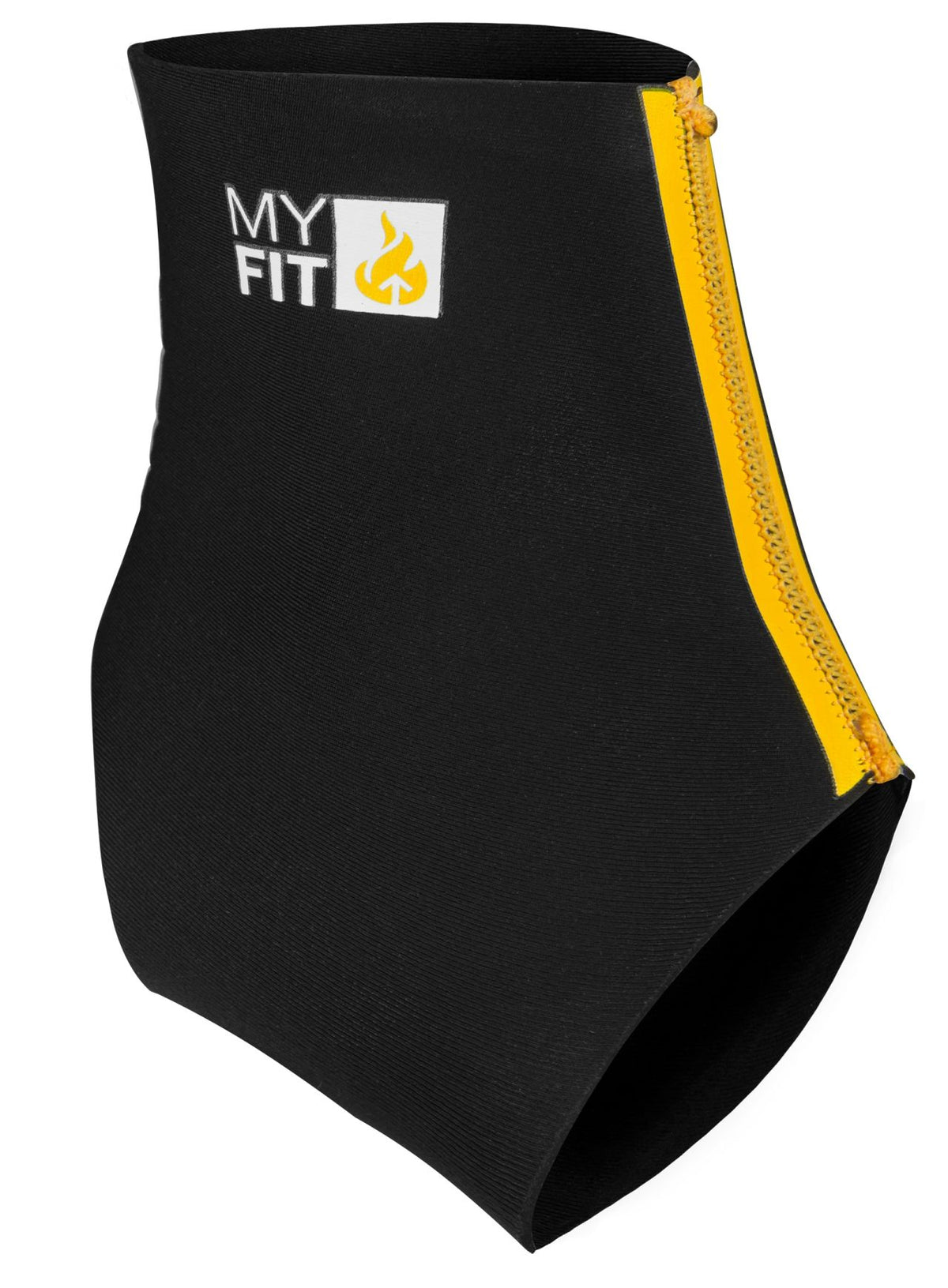
Even with well-fitting shoes there are situations in which the heel gets irritated: long tours, competitions, new shoes or sensitive skin. This is where Ankle Booties come in. They are thin neoprene socks with almost seamless construction, worn on bare skin under your normal sports sock. The friction then occurs between the neoprene and the sock, no longer on the skin of the heel.
| Thickness | Suitable for, according to the manufacturer |
|---|---|
| 1 mm | Athletes who need direct contact with the boot, e.g. speed skaters, ice speed skaters, ice hockey players, footballers, sprinters |
| 2 mm | Ambitious athletes with more severe blisters and chafing, e.g. inline skaters, basketball players, joggers, Nordic walkers, cross-country skiers |
| 3 mm | People who suffer badly from blisters due to loose or ill-fitting shoes, e.g. hikers, cross-country skiers (not available in XL) |
The Ankle Bootie SKIN is only available in 1 mm, but feels slightly thicker and softer and offers more padding than the classic 1 mm version. The super-stretch neoprene with Lycra hugs the foot well. An alternative is the Powerslide Footies, which are also available in 1, 2 and 3 mm, in sizes from 31 to 49. You will find a detailed decision guide in the guide Ankle Booties: 1, 2 or 3 mm?.
Depending on the sport
- Hiking: downhill the foot slides forward, uphill the heel lifts. Well broken-in boots and firm lacing over the instep are crucial here.
- Running: many repetitions with high moisture – technical socks and a firm heel fit are particularly important here.
- Inline skating: the sideways push-off puts strain on the heel and ankle. Find out more in Avoiding blisters and pressure points when inline skating.
When no off-the-shelf shoe fits
If heel blisters keep recurring despite all measures, the cause is often the shape of the foot. With a very narrow heel or a pronounced heel bone it is worth talking about alternatives – for speed skates, all the way up to a made-to-measure boot.
Do you have questions about the fit of your skates or the right thickness of Ankle Booties? Call us on +49 (0) 77 20 / 34 70 6, visit our shop in Villingen-Schwenningen or write to us using the contact form.