

Blisters, chafing and pressure points are among the most common reasons why a skating tour ends earlier than planned. Tight speed skates and new boots in particular can rub at first. The good news: with the right fit, suitable socks and thin neoprene protection, most problems can be avoided.
How do blisters develop when skating?
Blisters develop when the skin repeatedly rubs against the boot. Heat and moisture intensify the effect, because softened skin is more sensitive. Typical causes are:
- a boot that is too big, so that the heel slips during push-off
- a boot that is too small or too tight in one spot and pinches
- new boots whose shell or liner has not yet adapted to the foot
- thick or damp cotton socks that wrinkle
- long distances and high temperatures
Seven tips against blisters and pressure points
- Choose the right size: the foot should sit firmly without pinching. The heel must not lift. Our size chart will help you choose.
- Break in new skates: start with short laps and increase the distance gradually.
- Have the shell fitted: many speed skate shells can be heat-moulded. This often makes pressure points on the ankle or the ball of the foot disappear after just one fitting.
- Wear thin technical socks: they wick moisture away and do not wrinkle.
- Lace correctly: slightly looser at the front, tighter over the instep – so the heel sits securely without the toes being cramped.
- Watch for warning signs: redness and burning are the first signals. Taking a break at that point often prevents the blister.
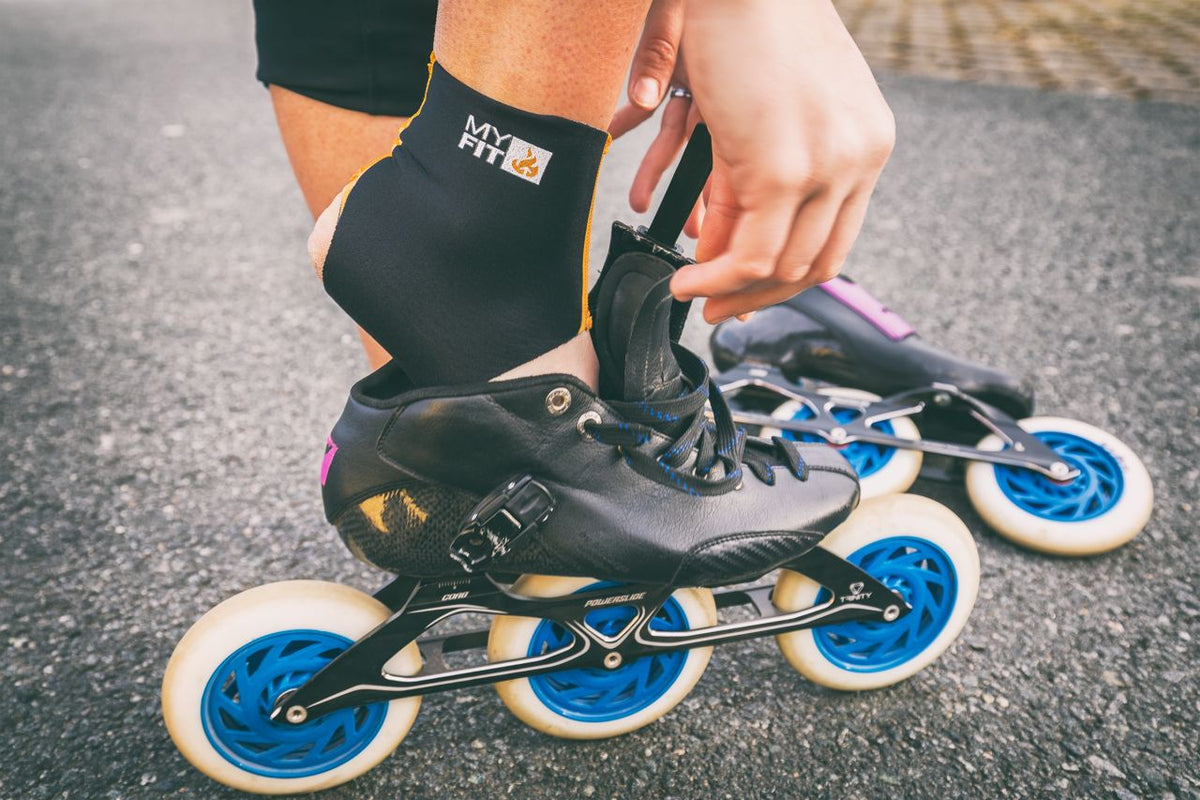
- Protect sensitive areas: thin neoprene protection worn directly on the skin significantly reduces friction.
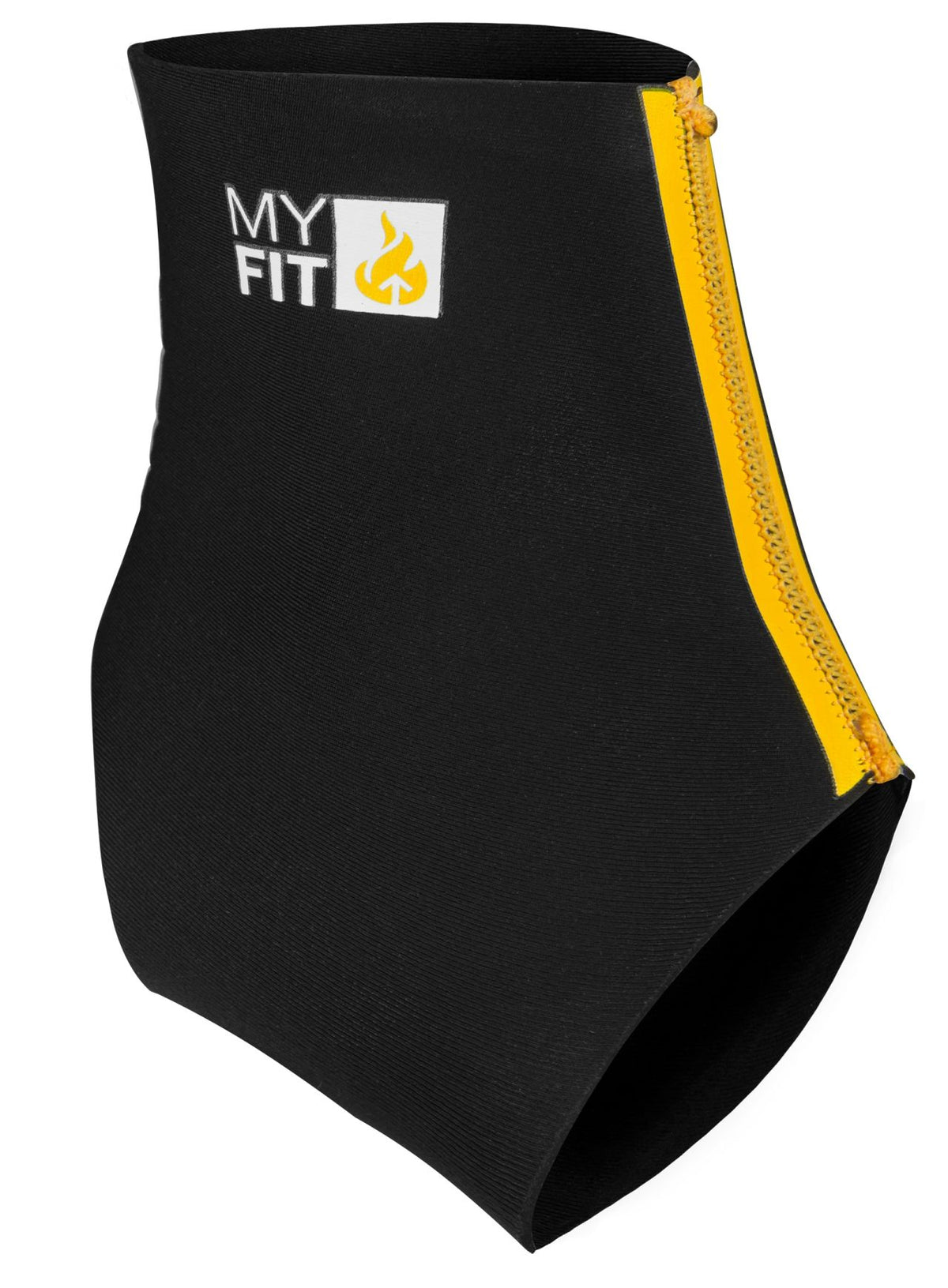
Ankle Booties: neoprene protection directly on the skin
Ankle Booties are thin neoprene socks with almost seamless construction. They are worn on bare skin and simply pulled on under your normal sports sock. The friction then occurs between the neoprene and the sock instead of on the skin. Ankle Booties come in three thicknesses:
- 1 mm: ultra-thin, for athletes who need direct contact with the boot – for example inline speed skaters and ice speed skaters
- 2 mm: for ambitious athletes with more severe blisters and chafing, for example when inline skating, jogging or cross-country skiing
- 3 mm: for loose or ill-fitting shoes, for example when hiking
Somewhat softer and with more padding than the classic 1 mm version is the Ankle Bootie SKIN, made of particularly stretchy super-stretch neoprene. For blisters on the toes there are the Toe Booties, which can also be combined with Ankle Booties. An alternative is the Powerslide Footies. You will find all models in our Ankle Booties category.
When nothing else helps: a made-to-measure boot
Some feet do not fit into any off-the-shelf boot – for example with a very narrow heel, a wide forefoot or misalignments. In that case a made-to-measure boot can be the solution. You can find out more in our Custom-Made Boots category. You can read which type of skate generally suits you in the guide Speed skates or fitness skates?
And if you already have a blister?
If possible, do not open small blisters; protect them with a blister plaster until the skin has healed. For open, inflamed or recurring sores, please seek medical advice.
Do you have questions about fit or the right thickness of Ankle Booties? Call us on +49 (0) 77 20 / 34 70 6 or write to us using the contact form.