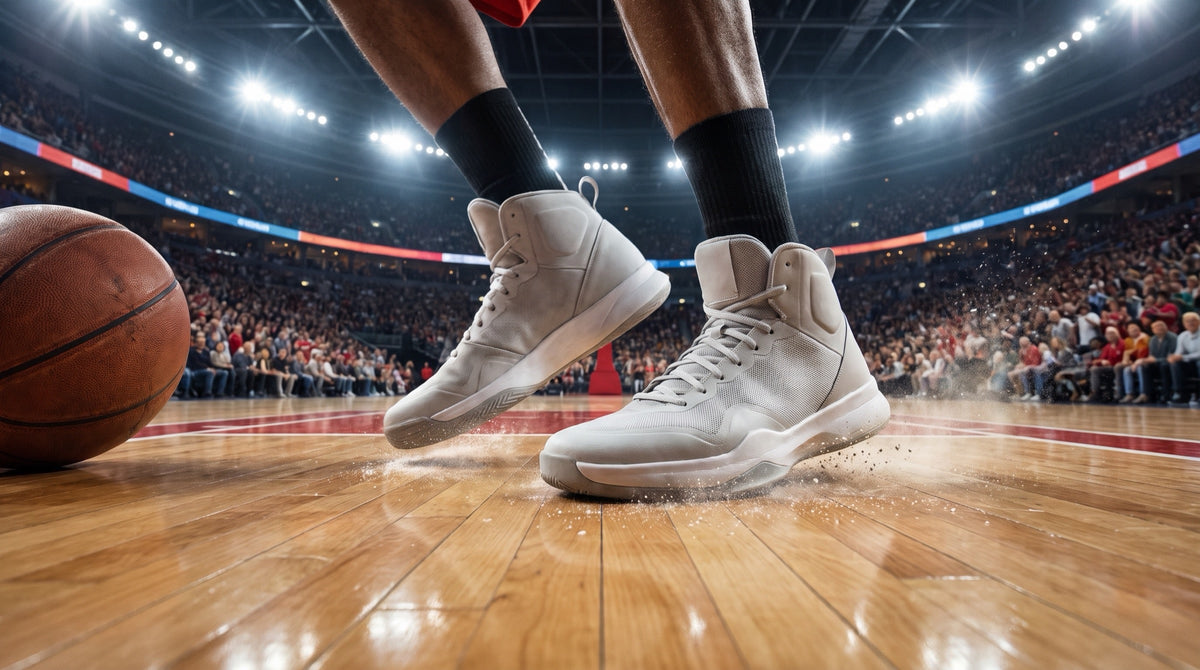
Sprint start, emergency stop, jump, landing, turning on the forefoot: in basketball and other indoor sports such as handball, volleyball, badminton or squash, the feet are subjected to extremely varied loads in a short time. The grippy indoor floor holds the sole in place while the foot keeps working inside the shoe. This is exactly where friction, heat and ultimately blisters develop. In this guide we show where the typical problem spots are and how you can prevent blisters with the right shoe, sock and thin neoprene protection.
Why indoor sports are so demanding on the feet
On asphalt or a forest floor the sole slides a little during a quick change of direction. An indoor floor, on the other hand, offers a lot of grip. The shoe stops abruptly and the foot slides forward or sideways inside the shoe. These shear forces act on the skin – game after game, training session after training session. Then there is the heat: in a sports hall the feet sweat a lot, and damp skin is much more sensitive to friction.
Typical triggers at a glance:
- abrupt stops: the toes hit the front and the forefoot rubs on the sole.
- turning movements: pivot steps in basketball or lunges in badminton put strain on the ball of the foot and the big toe.
- jumps and landings: the heel lifts and comes down again – if the fit is loose, the heel rubs.
- new or poorly fitting shoes: high-top basketball shoes often have a stiff collar that can rub on the ankle.
- damp socks: after an hour of training, cotton socks are often soaked through and wrinkle.
The typical problem areas
| Spot | Typical movement | What helps |
|---|---|---|
| Ball of the foot and forefoot | Turning, sprint start, lunge | Dry feet, smooth socks, protective layer on the skin |
| Big toe and tips of the toes | Stopping, foot slides forward | Right length, firm fit in the midfoot |
| Heel | Jump and landing | Lace the heel in firmly, use the top eyelet if necessary |
| Ankle | High, stiff collar | Break in the shoe, absorb the friction |
Prevention: shoe, lacing and socks
- Buy indoor shoes that fit: the foot should sit firmly in the midfoot and at the heel, but not hit the front. Try shoes on with your training socks, ideally in the afternoon.
- Break them in before match day: wear new shoes in light training first, not straight away in a match or tournament.
- Lace with purpose: firm over the instep so that the foot does not slide forward when stopping. Slightly looser over the toes.
- Wear technical socks: they wick moisture away and stay smooth. Look for flat seams.
- Change your socks: during long training sessions or tournament days a dry pair in between can help.
- Look after calluses, do not remove them radically: very thick, hard calluses can form blisters underneath, while completely removed calluses make the skin sensitive. A moderate, even amount makes sense.
- Take warning signs seriously: if a spot burns, it is better to take a short break and protect it than to keep playing until the end.
Ankle Booties in 2 mm: also for basketball players, according to the manufacturer
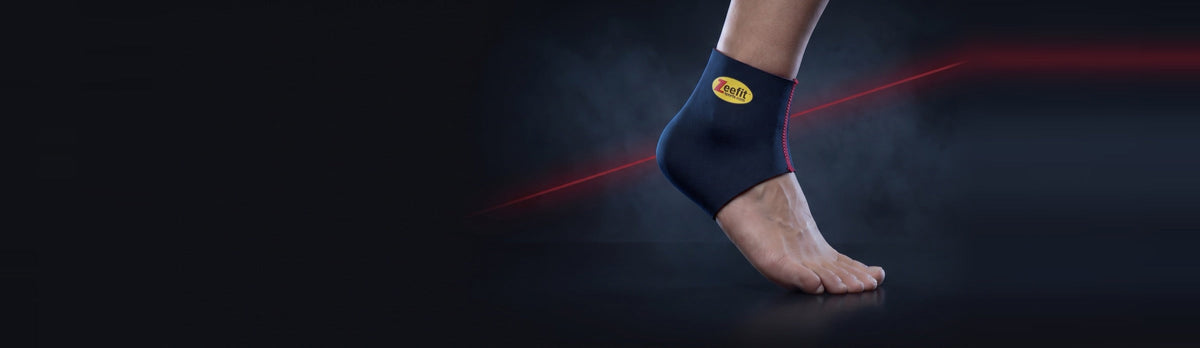
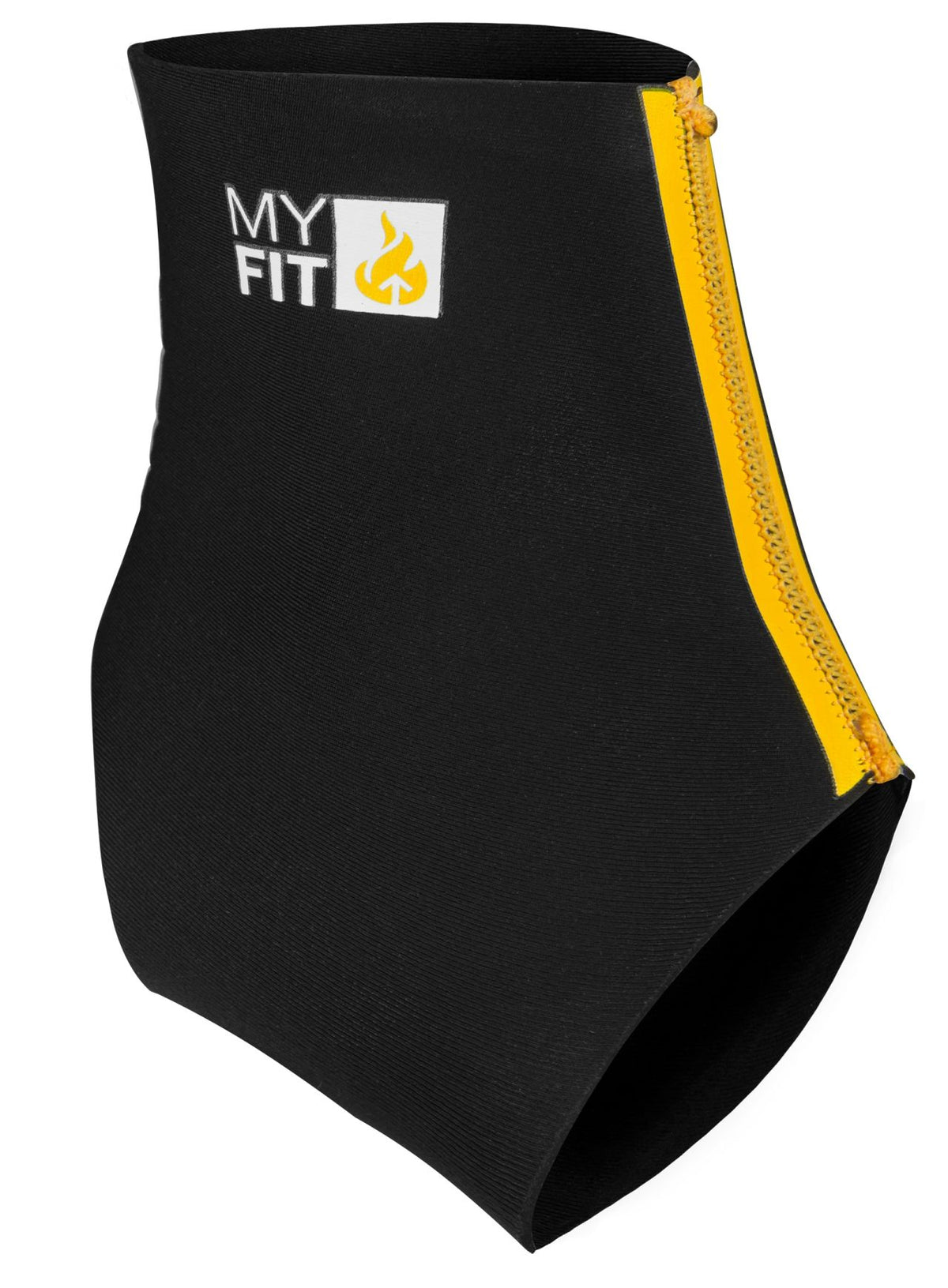
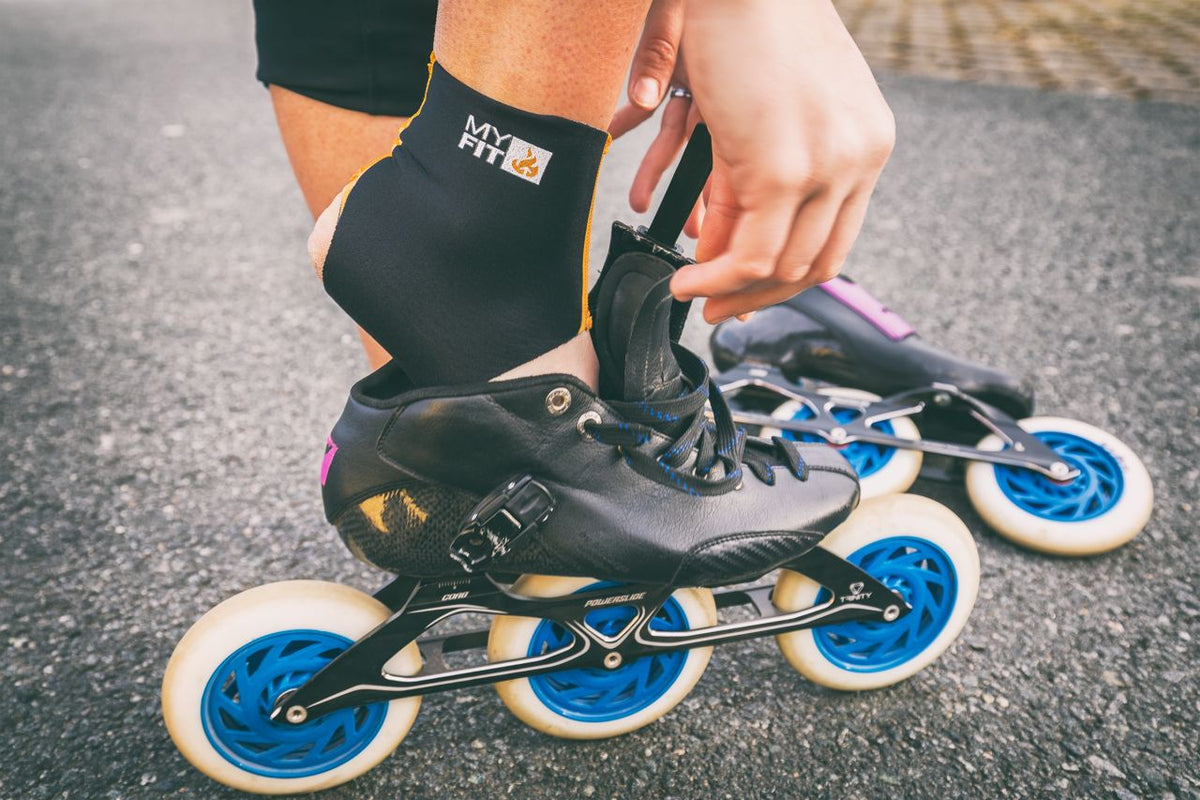
Many indoor athletes are familiar with tape and blister plasters. Thin neoprene protection directly on the skin is less well known. Ankle Booties are neoprene socks with almost seamless construction, worn on bare skin under your normal sports sock. The friction then occurs between the neoprene and the sock, no longer on the skin.
According to the product description, the 2 mm thickness is particularly popular with ambitious athletes who have problems with more severe blisters and chafing – alongside inline skaters, joggers, Nordic walkers and cross-country skiers, basketball players are explicitly mentioned there. If, on the other hand, you want the most direct contact with the shoe, for example for sprints, 1 mm is the better choice. We explain the differences between the thicknesses in detail in the guide Ankle Booties: 1, 2 or 3 mm?.
An alternative based on the same idea is the Powerslide Footies. They are also available in 2 mm, and here too the manufacturer names basketball players as typical users. Footies are available in sizes from 31 to 49. If it is mainly your toes that suffer, the Toe Booties offer dedicated toe protection made of 1 mm neoprene that can be combined with Ankle Booties. Find out more in the article Avoiding blisters on your toes.
What to bear in mind when wearing them
- Pull the Ankle Booties directly onto dry skin, with the sports sock over them.
- Check during your first training session whether the shoe still fits well with the extra layer. With very snug shoes the thinner version is often more comfortable.
- Test new combinations of shoe, sock and booties in training first, not in a match.
If a blister has formed anyway
If possible, do not pierce the blister, and protect it with a blister plaster until the skin has healed. Give the spot time before you put full load on it again. For open, inflamed or recurring sores, please seek medical advice.
Would you like to know which thickness suits your indoor shoe? We will be happy to advise you by phone on +49 (0) 77 20 / 34 70 6, in our shop in Villingen-Schwenningen or via the contact form.