

Tarmac is not available everywhere – and not everyone wants to train only on cycle paths in summer. With off-road skating you roll on large pneumatic tyres over farm tracks, forest paths and gravel paths, training almost as if you were on cross-country skis. This guide explains the difference between Skikes and off-road skates, what matters with poles and which parts you need for maintenance. You will find an overview of the equipment in our Off-road skating category.
Skike or off-road skate: what is the difference?
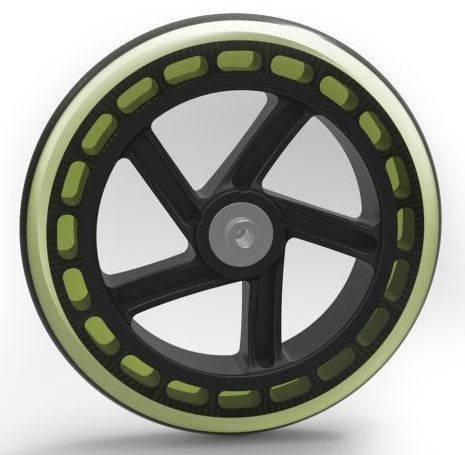
The name Skike combines ski and bike: a frame with two pneumatic tyres that you step onto in your own sports shoes. Straps and a calf shell hold your foot in place. The Skike V7PLUS PRO, for example, has pneumatic tyres with a diameter of 15 cm, a brake system on both sides, quick releases and mudguards, and can be adjusted from about size 36 to 47. You will find all models under Skike.
Off-road and Nordic skates from Powerslide, on the other hand, are skates with a fixed boot. The Powerslide NEXT Outback 150 Trinity rolls on three 150 mm pneumatic tyres, the NEXT Edge 150 on two. Both have a mouldable liner that covers two sizes each, and a Trinity mount that also takes standard inline frames.
| Skike | Off-road skate | |
|---|---|---|
| Boot | your own sports shoes | fixed skate boot |
| Wheels | two pneumatic tyres | two or three pneumatic tyres (150 mm) |
| Brake | integrated, depending on the model | cuff-activated brake, can be retrofitted depending on the model |
Who is off-road skating suitable for?
- Cross-country skiers in summer training: the movement and pole technique are similar to the skating step on skis.
- Nordic bladers: using poles actively engages the upper body.
- Fitness enthusiasts: the training works the legs, core and arms at the same time, and the pneumatic tyres are easy on the joints.
The brake is operated via the cuff: you straighten your knee and push your foot slightly forwards, and a brake element then presses on the tyre. Practise braking first on level terrain with a clear view.
Poles: length, technique and tips
There are special poles for Nordic blading and Skikes, for example from KV Plus. As a rule of thumb for the length, the manufacturer gives: (height in cm plus 4 to 5 cm) × 0.9. Off-road, a slightly shorter pole is usually more practical. Plant the poles at an angle behind your body and push off powerfully, instead of planting them in front of you.
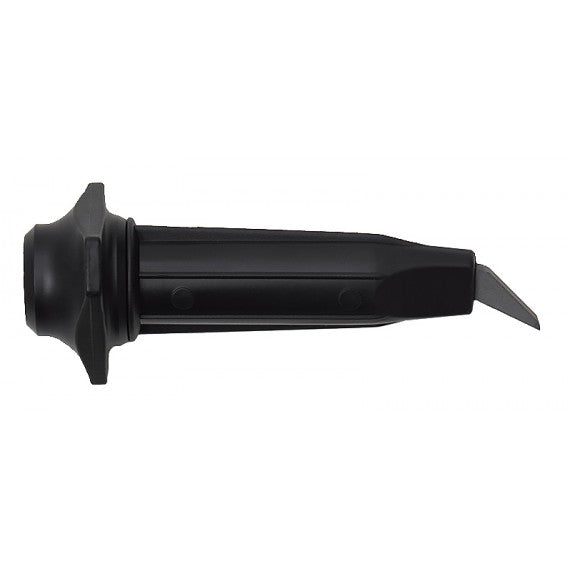
The poles have a hard Videa tip that grips on tarmac and firm surfaces. Damping and anti-shock tips reduce the clacking and vibrations. A rubber buffer fitted over the tip cushions the pole plant and makes training in a group safer.
Which surface is suitable?
Firm farm tracks and forest paths, lightly gravelled paths and tarmac are well suited. Deep sand, coarse gravel, wet roots and steep descents require a lot of experience. Adjust the tyre pressure to the ground: lower pressure on loose surfaces, higher on tarmac – within the manufacturer's specifications.
Maintenance and spare parts
- Check the tyre pressure before every outing, ideally with a pump with a pressure gauge.
- Replace tyres and inner tubes after punctures or when the tread is worn. For Powerslide and Skike there are tyres in the 150 × 30 mm format as well as matching inner tubes.
- Backstop: it prevents the wheel from rolling backwards and thus also allows the classic diagonal stride. For Skike, the manufacturer recommends fitting at least the front wheels, preferably all wheels.
- After outings in wet conditions, remove dirt and check screws, straps and quick releases.
You will find spare parts under Skike accessories and spare parts and under Powerslide accessories and spare parts. If you are unsure which equipment suits you, we will be happy to advise you in our retail store in Villingen-Schwenningen.